
To maintain a fair, stable, and transparent trading environment, the following trading strategies and behaviors are strictly forbidden:
The use of automated systems (Expert Advisors or EAs) designed to execute numerous trades within seconds—aiming to profit from minute market fluctuations—is not allowed.
Yes, scalping is permitted. However, each individual trade must remain open for a minimum of three (3) minutes. Trade(s) closed in less than three minutes, or trading activity that appears suspicious or resembles arbitrage (which is prohibited), may result in action by our Risk Team. All trades are closely monitored by the Risk Team.
Simultaneously placing opposing positions (buy and sell) either in the same trading account or across multiple accounts to reduce exposure or create arbitrage is not permitted.
Continuously increasing position sizes when trades move against the initial market bias—regardless of lot size—is considered a high-risk tactic and is strictly forbidden.
Collaborating with other traders or accounts to place opposing trades for the purpose of offsetting risk collectively is considered collusion and is not allowed.
Only self-developed EAs are permitted. The use of commercial, publicly available, or third-party-created automated trading tools is strictly prohibited.
Delegating trading authority to another individual or external service provider—whether compensated or not—is not allowed under any circumstances.
Replicating trades from other accounts or signal providers, whether manually or through automated systems, is not permitted.
Employing a grid-based approach by placing multiple buy and/or sell orders at fixed price intervals to profit from price movements without directional bias is prohibited, as it often resembles arbitrage.
Setting pending orders (limits or stops) shortly before major economic announcements with the intent to exploit news-driven volatility is not allowed.
Order book spamming involves placing a large number of orders in the order book to create a misleading impression of market activity. This manipulative practice can disrupt market integrity, provide unfair advantages to certain traders, and strain trading systems.
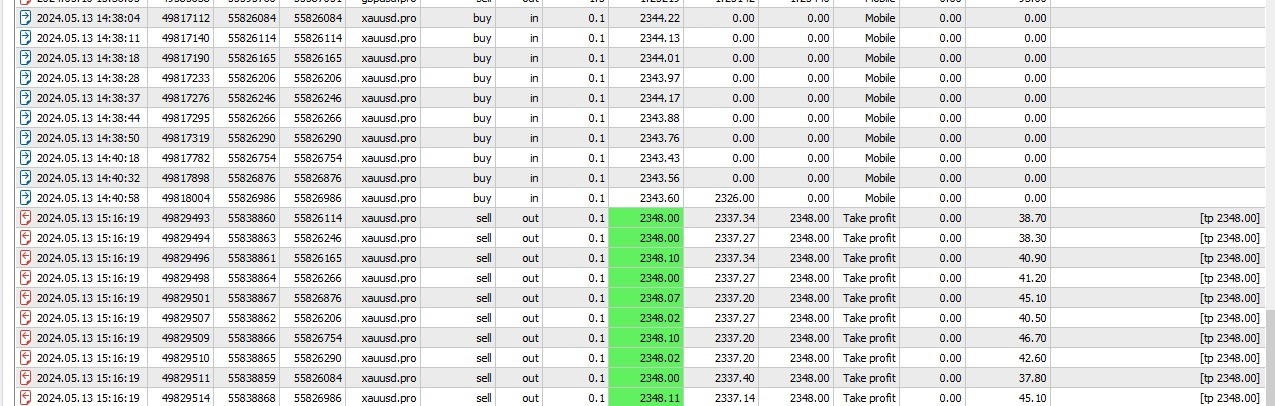
A trader entering multiple orders (e.g., 0.1 lots) in a short period instead of placing a single order with all the intended buying power (e.g., 1 lot). This activity can be seen as an attempt to manipulate the price feed in a simulated environment.
Using strategies that intentionally or unintentionally take advantage of platform inefficiencies—such as pricing lags, latency issues, or data feed discrepancies—is strictly forbidden.
Consistently initiating trades in a single direction without proper market analysis or strategic rationale is considered irresponsible and is not permitted.
Utilizing automated systems to open multiple positions simultaneously without active trader oversight or direct management is not allowed.
Executing trades with position sizes that are disproportionately large relative to the account balance—especially during periods of low liquidity (e.g., market open/close or news events)—is prohibited.